Hello, gamers!
We are Mary de Falco and Gabriela Daza, and the game that we have been exploring is Roblox.
Roblox is a game platform that allows the user to play games or be the designer by programing new games that everyone can play.
Once inside, you, as a player, can play one of the pre-existing multigenre games or go to the studio to create your own game and challenges.

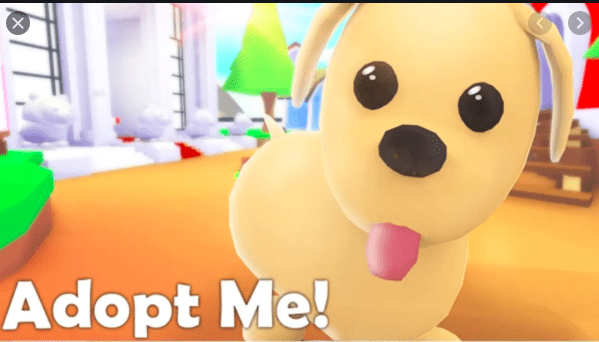
The game inside of Roblox that we have been playing is: Adopt me!
A multiplayer online role-playing game allows the player to adopt an egg that will eventually turn into a pet with needs. Once you enter the game, a house is assigned to you with some furniture, and every player has a budget with Robux “money.” The player can interact with others and the rest of the world. There are shops, pizza restaurants, a hospital, a nursery, a school for dogs, and many other different places for the pets and their owners.
The player can decide the role that he wants to play: a baby to be adopted or a mom/dad who will adopt babies or pets and take care of them.
To play, we were using a laptop and a cellphone to try different devices.
That was a summary of some of the many learning opportunities that we can find in this game. It is also adaptable to different grade levels, from EC to upper elementary, because it provides mathematical opportunities in different levels.
We focused our exploration as if we were Kinder students or designing a lesson through this game for a Kinder classroom.
Learning Content in the Game:
- Math: There is math everywhere! Starting with the Robux currency and personal budget. Understanding trading and commerce. Taking care of the pets, and understanding how they evolve, how many they need, and in how many days. Administrating their Robux money while supplying all of their pet’s needs: buying food, building a house, drinks, medicines, clothing, etc. If the player decides to build a house, change the furniture or modify the structure, they will be learning spatial awareness, measuring, and even coding, just to name a few of the mathematical opportunities.
- Language: Vocabulary and snap words exposure. Second language acquisition. The game displays several pop-up messages alerting pet’s needs and interactions between players. Students are exposed to words, meanings, contexts, reading, snap words, places, names, etc. There is a live chat where they can interact and communicate with the rest of the players. All of the action buttons are labeled with words (trade, feed, backpack, directions). If they want to complete a task, there is a GPS with all of the places’ names. The chat is bilingual: Spanish and English.
- Science: This game provides a great opportunity to discuss life cycles, living things’ needs, and the environment. Because of the different ways of transportation that they can interact with, there is an opportunity to learn about: forces, friction, movement, speed. One of the pet’s needs is temperature, promoting inquiry into the weather.
- Social: The game is 100% social. It requires collaboration for almost every action of the game. Children have the option to create a family inviting other team players to role-play and host parties in their houses. They can make new friends, practice their leadership skills, be caring, and feel empathy (to pets or other players). Of course, there will be conflicts, especially during trading, because of the transaction’s fairness, teaching them about conflict solving.
Who might be excluded?
- Students that don’t have access to a device or have connectivity issues at home.
- Students with physical or learning disabilities (epilepsy, visual impairments, executive functioning skills, processing, motor skills difficulties, etc.)
- Students that don’t engage with video games because of interest.
- Children whose parents might refuse the children’s opportunity to play video games because of personal beliefs and misconceptions about technology.
What skills are being activated in the “Adopt me” game?
The game activates all of the approaches to learning in kinder. Children are exposed to different scenarios and contexts promoting:
- Social skills: Accepting responsibility, group decision-making, adopting various group roles (family members, pet owner, and pet), cooperating, resolving conflicts, and respecting others.
- Self-management skills: Healthy lifestyle, time management, spatial awareness, organization, fine motor skills, codes of behavior, informed choices.
- Thinking skills: Knowledge acquisition, comprehension, application, analysis, evaluation.
- Communication skills: Reading and writing, viewing and presenting, non-verbal communication.
- Research skills: Formulating questions, observing, planning, collecting/recording/organizing/ interpreting data, presenting research findings.
What content is handled in this game?
- Multiplayer online role-play
- Real-life scenarios
- Adopting and taking care of pets
- Finances, commerce, and trading
- Designing houses
How does the game foster creativity and critical thinking?
This game provides a variety of challenges and circumstances that require critical and creative thinking. Students need to make connections, activate previous and new knowledge, and carefully plan and adapt to different situations that enhance creativity. As they engage and evolve with the game, their interest is transformed into new content, keeping them motivated. The game offers the students the possibility to make choices and be in control. At the beginning of the game, they decide their identity by creating a character and its role affecting their interaction with the rest of the game and providing them different perspectives. They are challenged to learn about real-life situations throughout the game and will learn how to predict different outcomes.
The structure and how the game Roblox functions enhance critical thinking and learning in children because it covers all of the 16 learning principles described by Gee (2005).
How will you assess if learning is happening?
The best way to assess their learning is by playing with them, be part of the process, observe, listen, document, ask them questions. The great thing about Roblox is that we can be together without being together. Depending on their level and individual gaming paths, we discussed finding ways to teach them how to record their game progress on paper or Seesaw as asynchronous activities. Also, bringing the digital role-play on the game into the physical classroom or to the real-world as a class project where they can recreate their houses, clothes, pets, trading, families, etc., for a formal assessment.
A few examples of possible formative assessments of class content through the game:
- Tally mark, how many eggs do you have?
- Represent on a ten frame how many days do you need to grow three of your eggs?
- Draw how many pizzas did you buy today for your pet?
- Let’s see how many snap words you can find today on the game.
- Whole class or small groups discussion
- Storytelling during their writing
We hope you enjoy it and don’t forget to try this game yourselves. 🎮
Gaby, and Mary.