Andrea Haeussler: Middle School 6th, 7th & 8th Grade
Angelique Vives: Yearbook Class 9th, 11th & 12th Graders
Games played by Lucia, Andrea & Angelique
123, ABC
Students sit in a circle. The teacher or the started starts counting with 1 and passes it to the right. The next person passes 2, then the next one 3, and so on. When the student reaches 20, the next one starts with 1. Once the counting has been established, the teacher or started passes the ABC to the other side (opposite to where the numbers were sent). And the same process happens.
This is a spoon
Similar to the 123, ABC game. The teacher or starter starts the round going to the right (or left) passing a spoon and saying: “This is a spoon”. The person next to them says “A what?” Teacher responds: “A Spoon”. Studnet says “Oh, a spoon” and passes it to the next person, following the same dialogue. After about 2 or 3, the started passes the fork to the other side and follows the same dialogue.
Categories
Students stand in a circle. A category is selected. For example, countries. Everyone must say a topic from the category, in this case, a country. Rules: they can’t repeat the countries, they have to say it fast (no more than 3 seconds to think) and they have to be correct. If any of the rules are broken, they must sit out.
Connections
A person starts by saying a word, any word. The next person has to say a word that connects with the last word said. So if the first word was clouds, the next one can be sky. Then, the following person must connect to the last word said, so sky (not clouds). And so on. Rules: they can’t repeat the words, they have to say it fast (no more than 3 seconds to think) and the words have to connect and make sense. If someone makes a mistake, they must sit out.
Game played by Antonio Mayornick
Pictoword: Grade 6 (11-12 year olds)
Students read a series of pictures that combine to create a word. The series of pictures can be very simple and direct or the teacher can make it more challenging by making each syllable a different picture. The difficulty can also be increased by choosing pictures that don’t sound exactly like the word students are trying to figure out. A very simple example would be a picture of a stick of butter plus a picture of a fly. This word would be butterfly. A more difficult approach would be:
Students can play on teams or individually, the first person or team to say the correct word gets a point. If you’re writing the words on dry erase boards, teachers can have spelling count to earn the point.
What is Roblox? Roblox is an online platform for players to create games or play games other people have created, explore virtual worlds, and socialize with friends (or strangers).
Rules – Roblox has a set of Community Standards for all players as they interact with the many games and other players that are accessible on the platform. These community standards are broken into three categories; Safety, Civility & Respect, Fairness & Transparency, and Security & Privacy. Overall, Roblox encourages its community members, known as Robloxians, to “treat everyone with respect, both on and off of Roblox.
Objective – Roblox’s objective is to “build the metaverse: a space for people to adventure, experience, and explore.” It is a global community and Roblox wants to “ensure everyone feels welcome and safe and is treated with kindness and respect.”
Evaluation of the gameusing Gee’s 16 principles:
Identity- Players are able to build their avatar according to their own preferences. With Robux, players can purchase add-ons that further individualize their avatar. Due to the nature of virtual games, players can be anyone they want to be while playing Roblox!
Interaction- In Roblox games, there is a chat function where players may interact with one another. Each game is different, but in some of the games I tried playing, there were rules presented to me along the way. As I approached new stages or levels, new challenges were introduced.
Production – While there are many games available for play, some players choose to create and publish their own.
Risk Taking – Most games on this platform have a “checkpoint” feature, which allows players to reattempt portions of the game by trial and error. Users have the ability to take risks knowing there isn’t too much to lose.
Customization – Players can customize their avatars, they can create their own groups to play games, and they can create their own ”place” in the Roblox Studio. This “place” is similar to minecraft, where players have their own land and structures to personalize. The studio is where users can learn how to alter, edit, and design in their space and eventually their own game. Some games have different characters you can choose to play and you can customize their outfit in that specific game.
Agency – The players who choose to create their own games for others to play gain a strong sense of ownership and control over their own creation. For example, in “Theme Park Tycoon 2”, the owner has control over what they are doing and creating within the boundaries of the game. There are many creative features to adjust and explore within the game.
Well-Order Problems- There are levels or “stages” in games that are built on by prior stages. In Cotton Obby, for example, you learn to navigate on the first platform and all following platforms become more and more difficult to navigate. The skills are being built upon in each stage.
Challenge and Consolidation – You die in every game but there is the option to restart at the checkpoints you have passed.
“Just in Time” or “On Demand”- There is very little in the way of instruction or direction when you start a game, though in some of the games played, a character will tell you the directions for the level/stage you are currently working on. In other games, you can click a button that will allow you to read about game play upon your request only.
Situated Meanings – In “Scuba Diving at Quill Lake,” there are many places to explore and new vocabulary to learn throughout the game. Players can choose different areas to explore. Each area has specific landmarks, gear, and vocabulary for players to understand. The vocabulary is repeated and reinforced through images and actions within the game. This makes it very applicable and meaningful for players to explore and understand.
Pleasantly frustrating- Elements of this game can be frustrating, like not having control of your character or not being able to complete the task. You do “die” during the game, but then you come back to life and can try again. If a game is too frustrating, you are able to exit the game and find a different one to play. Some are much easier than others.
System thinking – Roblox has its own in-game currency called Robux, you can earn by creating games or by purchasing a gift card or subscription, which can be used to buy membership access to the Builders Club. With this, players can customize their character, known as an avatar, and improve their experiences in the game. Players engage in an exploration of Robux and what they create on the platform. How can they make money from what they create?
Explore, think laterally and rethink- Players can explore a variety of games, experiences, and skills. Since there are secrets hidden in games, players are encouraged to explore the entire map or capacity of the game before moving on.
Smart tools and distributed knowledge – Within the Roblox Studio, users design and interact with smart tools to create their own space. Users can design using Geometric or Physical planes, where you can account for collisions and other technical considerations.
Cross functional teams – Players can play games with other users they invite, or with anyone on the platform. Depending on the game, players have certain tasks to complete or roles to assume.
Performance before competence – Players can play any game on the platform before they ever decide to attempt to create their own game. Most games are exploratory and require players to navigate and explore the content before interacting with the game specifically.
Universal Design for Learning (UDL) Assessment
Reflection:
What are the barriers to the game?
The game has a Roblox Studio where each user can customize their own “place.” No navigation tutorial is provided.
Most customizable options or games require players to make a purchase.
Lack of prior knowledge about the game.
Only offered on computer, ipad, or cell phone. On the cell phone, you can’t play certain games.
You have to move the camera with a mouse and utilize the keyboard/space bar to walk and jump.
Anybody can talk to you in Roblox unless you specifically block users in settings.
Who may be excluded?
There are many free games available on Roblox, but there are also games that come at a cost which can be exclusive
This game is attractive to all genders (in one class of 26 second graders, 10 boys and 8 girls play Roblox on a daily basis as opposed to Minecraft where 8 boys and 1 girl play daily). Also, when signing up, the gender selection is optional.
How does the game foster creative and critical thinking?
Players can create their own games.
Choose your own adventure- There are endless games available to players! This allows for players to choose their preferred level of challenge.
Youtubers and other content makers make movies and simulations of their houses on Roblox.
There are secrets hidden throughout different games.
When players choose to create their own game, there are many creative features to choose from. The creator has the freedom to design his/her own game. The challenge is to make their design more desirable and attractive for more players to join and participate.
What skills are being activated?
If a player chooses to create their own virtual game, they will be required to code
Communication – with other players in the game or members of the roblox community.
Creativity
Resilience
How will I know if learning is taking place?
Leveling up – Players show they have gotten better at a game or have improved certain skills when they level up in a game.
Collaboration – Players develop interpersonal skills as they participate and strategize in games with others.
Coding – Users with effective code have playable games. Also, users show learning by troubleshooting their code.
Changes my students would make to Roblox:
If you get stuck in a game – there should be a way to keep going.
What is the game, and how can it be used in learning?
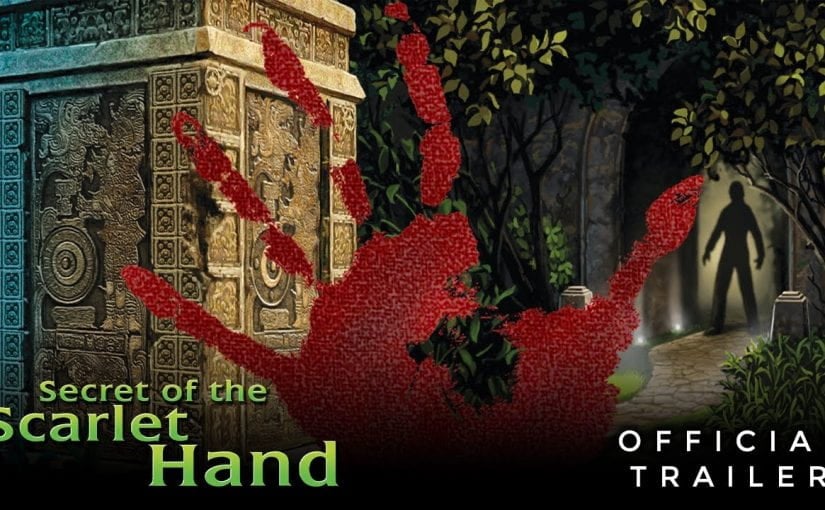
Nancy Drew: Secret of the Scarlet Hand is a first-person point-and-click mystery computer game. Players, on their own or in a group, assume the role of Nancy Drew, who is working as a deputy museum curator when a precious Mayan artifact is stolen! The player needs to find the missing artifact, catch the thief, and continue with their curatorial duties to ensure the exhibit opens with success.
In this game, students will play in small groups as a center activity to learn information about ancient cultures and beliefs. We believe that this game has many limitations but still offers an effective and engaging learning experience for our 5th-grade social studies students.
What content is handled in this game?
In this game, players will learn about the ancient civilization of the Mayans. By exploring the museum artifacts, they create a complex understanding of the elements of the Mayan culture and belief system. This meets the two main content standards of our upcoming 5th-grade social studies unit:
4.5.e. Explain the elements of culture (language, norms, values, beliefs, etc.).
4.5.f. Define the elements of a belief system (creed, code of behavior, rituals, community).
Students learn about the elements of ancient Mayan culture and beliefs system.
What are the barriers in the game and who may be excluded?
This is a video game appropriate for ages 10 and up. The game is a single-player game, and students will explore the content in the game at their own pace, and follow their own path.
Auditory Accommodations: The game makes some accommodations for players with auditory limitations or impairments. In the game, all audio is accompanied by written captions, including sound effects.
Age Limitations: The game has an ESRB rating of E10+ for mild violence and peril.
Visual Accommodations: There is a significant amount of visual input in the game. All audio is offered with both audio and text, but text-to-speech or other accommodations for people with visual impairments are not included.
The game offers audio and visual options to support all kinds of student abilities and preferences.
How does the game foster creativity and critical thinking?
The game offers puzzles and logical mysteries to be solved in creative ways. The player uses critical thinking and logical reasoning skills to advance through the game.The majority of the puzzles in the game have a single solution. However, how players solve the puzzles is entirely up to them. They can use their critical thinking, reasoning skills, and creativity to determine their own problem-solving process.
The game could be considered to be divided into phases. Certain activities must be completed to trigger the next phase of the game, such as completing a specific set of tasks, having a specific conversation with an NPC, being in a certain place at a certain time, etc. However, the order one would like to complete the tasks in is largely up to the player. They have controlled choice in determining the distinct path the game will take, but not the major checkpoints along the route.
Players often use scrap paper to try solutions and remember facts they will need later in the game. Some players focus on utility while others have let their creativity run wild with this. In this aspect, players are only limited by their own creativity, choosing how they will learn the information needed
How will you assess if learning is happening?
Phases of the game can be assessed using quizzes and on-demand written or spoken responses. By the end of the activity, students will create their own interactive museum exhibit using knowledge gained from the game. This project demonstrates their understanding of the elements of the Mayan culture and belief system and compares and contrasts them to the student’s own culture and belief system in modern-day Guatemala.
caption
Which of Gee’s learning principles does the game meet?
The Secret of the Scarlet Hand meets many of Gee’s 16 learning principles:
Identity: Students assume the identity of Nancy Drew and step into the role of deputy museum curator and detective. Although the only identity offered is of a young female, this game can be enjoyed by boys dan girls, young and old, as the focus of the game is not on the character themselves, and only shows the game from the character’s perspective.
Interaction: There are many options for interaction in this game. Students make decisions, such as dialogue options and options for action, that determine the outcomes of a situation. As the player interacts with characters and artifacts in the museum, the character collects new information that can be used to reach the game objective.
Production: In the game, plates co-design their game path by the decisions they make and the actions they take. Like most role-playing video games, you have to reach a certain goal in order to trigger the next part of the game. However, the path the player chooses to achieve the task is up to them.
Risk-Taking: This game has low consequences for failure, allowing players to take risks and try out different avenues for success. An example of this is if their character suffocates and dies if they fail to escape from the monolith in time. In this case, a second chance button is offered, allowing players to repeatedly try again from the cut scene.
The game offers a second chance for failed challenges and missions.
Customization: The game offers two different levels of difficulty: Junior detective and Senior detective. It offers multiple pathways for completing the game and allows players to design their own journey as they go.
Well-Order Problems: The types of puzzles and problems become more challenging throughout the game. Additionally, the amount of information about the Maya students must know to solve the problems and puzzles increases throughout the game. This is very clear in the end phase of the game, where players must complete a set of quizzes to get through the Mayan temple exhibit in order to achieve the goals necessary to finish the game. As the player advances through the temple, the quizzes get more difficult.
“Just in Time” and “On-Demand”: Certain dialogue options cannot be triggered until the player has done specific tasks. This ensures that players are not revealing an “info dump”. Instead, they get oral information when they need it. Additionally, some books, notes, guides, etc. are scattered throughout the game. Although players can pick them up or look at them at any point in the game, they do not need to read them thoroughly until they choose to.
How do we evaluate this game as a learning activity?
In the classroom, students will play this game in small groups as a center activity. The purpose of this game would be to allow students to explore Mayan culture in an engaging and self-directed way. Each student will learn content about Mayan culture and beliefs by playing the game and will apply it to their analysis of past to modern-day culture. We believe that this game does have some limitations, but would still serve as a useful, engaging, and effective learning activity for our 5th-grade social scientists.