
What is the game, and how can it be used in learning?
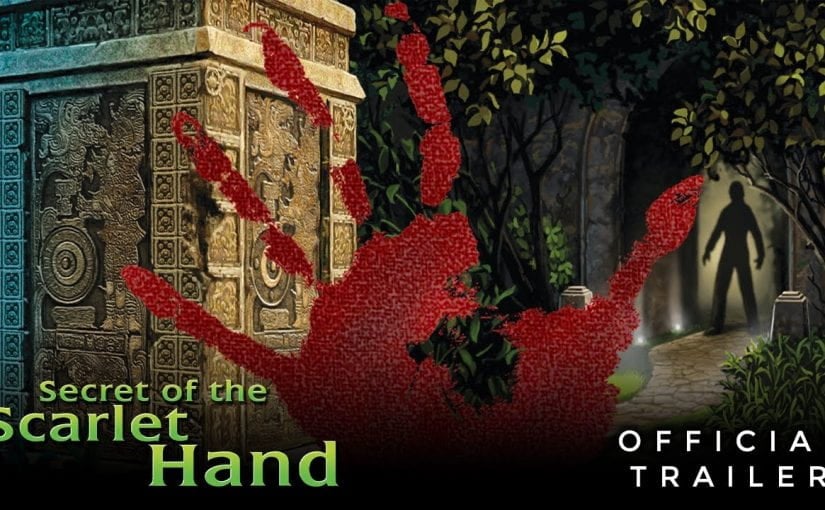
Nancy Drew: Secret of the Scarlet Hand is a first-person point-and-click mystery computer game. Players, on their own or in a group, assume the role of Nancy Drew, who is working as a deputy museum curator when a precious Mayan artifact is stolen! The player needs to find the missing artifact, catch the thief, and continue with their curatorial duties to ensure the exhibit opens with success.
In this game, students will play in small groups as a center activity to learn information about ancient cultures and beliefs. We believe that this game has many limitations but still offers an effective and engaging learning experience for our 5th-grade social studies students.
What content is handled in this game?
In this game, players will learn about the ancient civilization of the Mayans. By exploring the museum artifacts, they create a complex understanding of the elements of the Mayan culture and belief system. This meets the two main content standards of our upcoming 5th-grade social studies unit:
4.5.e. Explain the elements of culture (language, norms, values, beliefs, etc.).
4.5.f. Define the elements of a belief system (creed, code of behavior, rituals, community).

What are the barriers in the game and who may be excluded?
This is a video game appropriate for ages 10 and up. The game is a single-player game, and students will explore the content in the game at their own pace, and follow their own path.
Auditory Accommodations: The game makes some accommodations for players with auditory limitations or impairments. In the game, all audio is accompanied by written captions, including sound effects.
Age Limitations: The game has an ESRB rating of E10+ for mild violence and peril.
Visual Accommodations: There is a significant amount of visual input in the game. All audio is offered with both audio and text, but text-to-speech or other accommodations for people with visual impairments are not included.

How does the game foster creativity and critical thinking?
The game offers puzzles and logical mysteries to be solved in creative ways. The player uses critical thinking and logical reasoning skills to advance through the game. The majority of the puzzles in the game have a single solution. However, how players solve the puzzles is entirely up to them. They can use their critical thinking, reasoning skills, and creativity to determine their own problem-solving process.
The game could be considered to be divided into phases. Certain activities must be completed to trigger the next phase of the game, such as completing a specific set of tasks, having a specific conversation with an NPC, being in a certain place at a certain time, etc. However, the order one would like to complete the tasks in is largely up to the player. They have controlled choice in determining the distinct path the game will take, but not the major checkpoints along the route.
Players often use scrap paper to try solutions and remember facts they will need later in the game. Some players focus on utility while others have let their creativity run wild with this. In this aspect, players are only limited by their own creativity, choosing how they will learn the information needed
How will you assess if learning is happening?
Phases of the game can be assessed using quizzes and on-demand written or spoken responses. By the end of the activity, students will create their own interactive museum exhibit using knowledge gained from the game. This project demonstrates their understanding of the elements of the Mayan culture and belief system and compares and contrasts them to the student’s own culture and belief system in modern-day Guatemala.

Which of Gee’s learning principles does the game meet?
The Secret of the Scarlet Hand meets many of Gee’s 16 learning principles:
Identity: Students assume the identity of Nancy Drew and step into the role of deputy museum curator and detective. Although the only identity offered is of a young female, this game can be enjoyed by boys dan girls, young and old, as the focus of the game is not on the character themselves, and only shows the game from the character’s perspective.
Interaction: There are many options for interaction in this game. Students make decisions, such as dialogue options and options for action, that determine the outcomes of a situation. As the player interacts with characters and artifacts in the museum, the character collects new information that can be used to reach the game objective.
Production: In the game, plates co-design their game path by the decisions they make and the actions they take. Like most role-playing video games, you have to reach a certain goal in order to trigger the next part of the game. However, the path the player chooses to achieve the task is up to them.
Risk-Taking: This game has low consequences for failure, allowing players to take risks and try out different avenues for success. An example of this is if their character suffocates and dies if they fail to escape from the monolith in time. In this case, a second chance button is offered, allowing players to repeatedly try again from the cut scene.

Customization: The game offers two different levels of difficulty: Junior detective and Senior detective. It offers multiple pathways for completing the game and allows players to design their own journey as they go.
Well-Order Problems: The types of puzzles and problems become more challenging throughout the game. Additionally, the amount of information about the Maya students must know to solve the problems and puzzles increases throughout the game. This is very clear in the end phase of the game, where players must complete a set of quizzes to get through the Mayan temple exhibit in order to achieve the goals necessary to finish the game. As the player advances through the temple, the quizzes get more difficult.
“Just in Time” and “On-Demand”: Certain dialogue options cannot be triggered until the player has done specific tasks. This ensures that players are not revealing an “info dump”. Instead, they get oral information when they need it. Additionally, some books, notes, guides, etc. are scattered throughout the game. Although players can pick them up or look at them at any point in the game, they do not need to read them thoroughly until they choose to.
How do we evaluate this game as a learning activity?
In the classroom, students will play this game in small groups as a center activity. The purpose of this game would be to allow students to explore Mayan culture in an engaging and self-directed way. Each student will learn content about Mayan culture and beliefs by playing the game and will apply it to their analysis of past to modern-day culture. We believe that this game does have some limitations, but would still serve as a useful, engaging, and effective learning activity for our 5th-grade social scientists.